
Rage without Reward - God of War: Ascension’s Combat Design Issues
Introduction
Like the previous entries, God of War: Ascension aimed to deliver a combat system centered on player aggressiveness, with Kratos going around demolishing everything in his path.
However, a quick search online shows that reception was mixed: some players praised the demanding level of mastery required, while many others found that same challenge frustrating.
Personally, I think that the combat system carries some issues. For a series that aims for player aggressiveness, the player tends to not feel in control a lot of times, with the different interlocking systems that make up GoW: Ascension conflicting with each other.
In this article, I’ll attempt to explore these problems by examining some of the game’s combat systems.
Combat Gameplay Design
Rage Meter
One of the major combat features in GoW: Ascension is the Rage Meter. The player hits enemies to generate rage and, once the meter is filled, they can access and use powerful attacks.
Players can also lose rage in two ways:
- Taking damage.
- Failing to perform aggressive actions.
Once the Rage Meter is full, players can:
- Use combo moves that are not available otherwise.
- Spend all rage on a powerful elemental attack.
Rage System Issues
With the basic mechanics of the rage system established, let’s explore some of the issues.
Generation vs Depletion Rate
The player has to hit a lot of enemies to fill up the meter. However, taking damage depletes large chunks of it (if the player gets hit three or four times they basically lose the entire meter). This can be very frustrating as players are racing to get access to some of the cool moves and everything can be undermined by a single mistake.
So, these become the player options:
- They can be very aggressive to keep enemies herded and keep generating rage and spending it – this perfectly aligns with the game’s aggressive philosophy.
- Since any wrong move can quickly destroy all the hard work, players also need to use defensives wisely. Yet, too much defensiveness can also deplete the meter, so it again pushes players to be aggressive.
This seems like an interesting set of meaningful choices that follows the game’s brutal style of combat, so what’s the catch?
Well, enemies aren’t really designed to be dealt with aggressively and can quickly counter and disrupt the flow of combat — we’ll take a look at enemy design later. In any case:
- Player aggressiveness leads to inevitably being hit by enemies and the rage meter depleting really fast as a consequence.
- Attempting to stop the relentless enemies by blocking and dodging, always puts players in a race against time, for the Rage Meter might start depleting at any moment.
Special and Enhanced Combo Moves
In the previous games, players could use red orbs to upgrade the Blades of Chaos, instantly unlocking new combos ready to be used. In GoW: Ascension, not only do players still need red orbs to unlock combos, but some moves are also locked behind a full Rage Meter.
The system seems designed to reward players for maintaining full Rage, but in practise, it punishes them for not having it. The “rageless” versions of combos feel weak by comparison, and the previously mentioned difficulties in generating and maintaining rage only serve to highlight this.
Rage of the Gods
Finally players could use [L3] + [R3] to unleash a special move based on the current elemental power they had selected. This ability consumes the entire rage meter, so it puts the player back into the weaker versions of combos.
Now, this again seems to create a situation where the player has to make a meaningful decision:
- The player can choose to keep all the rage, so that they can keep the strong combos active.
- Or they can spend it in one rewarding powerful attack.
The frustrating process of generating rage — combined with the constant, punishing threat of losing it all after just a few mistakes — ends up reducing the player’s decision space. I often found myself spending it as soon as possible rather than saving it strategically.
In addition, we can pose a second question: for Rage of the Gods, is the reward even worth the investment?
Elemental Powers
Rage of the Gods
Depending on the elemental power selected, Kratos’ Rage of the Gods ability varies in aspect and effect:
- Rage of Ares – a swipe that hits one enemy and makes them explode after a while.
- Immovable Blast – Kratos impales and freezes one enemy.
- Blinding Rage – Kratos channels lighting against enemies.
- Army of Hades – a wave of souls swirls around, damaging all enemies.
I found Blinding Rage and Army of Hades abilities useful:
- Blinding Rage makes the player immune while channeling which allows for some free damage.
- Army of Hades’ souls swirl for a while providing a nice passive damage boost.
As for the other two:
- Immovable Blast freezes one enemy that the player can shatter for an instant kill – however it is really hard to do so, due to the nature of enemy design and enemy encounters (as we will see later).
- Rage of Ares is simply underwhelming. It doesn’t do much damage and even its visual payoff is lackluster. For some reason, it can also miss enemies (though it doesn’t spend the rage meter if that happens).
All these abilities had also unclear rules in terms of how they influence enemy behaviour. Sometimes they pierced Super Armor and staggered enemies. Other times, they didn’t which was unreliable, preventing players from making intentional decisions.
With all that said, is the rage investment worth the reward?
Yes, but for the wrong reasons. I’d use Rage of the Gods to spend the rage meter, predicting that I would inevitably take damage soon and lose it anyway.
Elemental Magic
The Elemental Magic attacks in GoW: Ascension work similarly to how they did in the previous games. The player spends some mana and does a massive attack that affects all enemies around.
There isn’t much to say about this ability as it was a nice damage boost that could be used strategically to move the encounter forward. There is an issue, however, with when and how the player unlocks both the Rage of the Gods and the Elemental Magic.
Unlocking Elemental Powers
Now, all these elemental powers have their uses and some of the concerns I shared might resonate with some players while others didn’t mind it or found ways around their limitations.
However, there is another issue with the pace at which these abilities are unlocked.
Players unlock these powers during certain sections of the game near gates that represent each of the gods.
For example, when players unlock the Ares (fire) elemental power, they get access to both the Rage of the Gods and Elemental Magic abilities associated with it immediately.
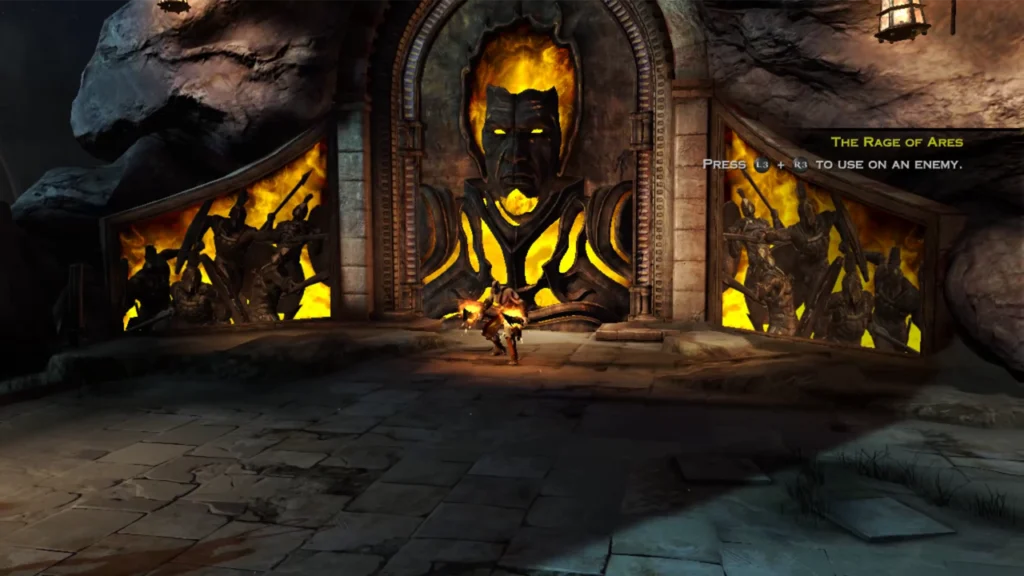
However, none of the other powers do the same. When players unlock Poseidon, Zeus and Hades’ elemental powers, they don’t come with the Rage of the Gods ability nor the mana Elemental Magic.
Instead, these are locked behind upgrading the elemental powers with red orbs. Therefore, when players unlock a new power, the game is basically telling them, “here’s a new colour for your weapon, but the one you had before is better”. The game creates no space for players to experiment with a new unlocked ability instead locking everything behind an hefty investment of currency. This process can take a few hours of gameplay, with the elemental magic ability being locked behind the very last upgrade level.
This begs the questions: why should players care about a newly unlocked ability, that is currently weaker compared to what they already have? Why even unlock it in the first place?
Other Concerns
Weapons
The game includes a weapon system that lets players pick up disposable weapons that can provide different advantages.
Personally, I did not find the weapons to be of much use:
- There are some ranged weapons (like Javelins and Slings) but players can easily reach most types of enemies by grappling towards them with the Blades of Chaos.
- Hammers seem to pierce through enemy Super Armor and stagger them… sometimes. This makes them unreliable.
There is also another reason why using weapons can be discouraging, which has to do with animation cancelling.
Animation Cancelling
Similarly to God of War III, players can animation cancel normal attacks into dodge and block, and they can’t when it is the final combo move. Unlike God of War III, this final combo move does not pierce Super Armor, meaning enemies can still act.
In addition, there are many other abilities that lock the player, forcing them to finish the animation before they can act again. Some examples:
- Advanced melee combat abilities ([L1+ Square] and [Square(Hold)]).
- The disposable weapons I just mentioned above.
- The Rage of the Gods ability — locking the player into a long animation which at times did not pierce enemy Super Armor or prevented enemies from acting.
All this discourages players from taking aggressive risks, since they will more often than not expose themselves to an enemy counter-attack without an option to react. When the player sees it coming, it is already too late.
Parry
The Parry ability also suffered some changes from its previous game’s iterations that made it needlessly harder to use.
In GoW III:
- The input is one button [L1].
- It is the same input as the Block — if the player fails the Parry the character keeps blocking.
- Successful Parries do a small area of damage effect around the player (for normal attacks).
In GoW: Ascension:
- The input is more complex [L1+X].
- It is a different state than Block and cannot be animation cancelled, meaning if the player fails the Parry they’ll be out of control and vulnerable for a few frames.
- A successful Parry has the player lunge forward and strike back — however this can fail to hit the enemy character.
It is understandable since this is a prequel, that Kratos is not as strong and doesn’t have the Golden Fleece which allowed him to perform such powerful parries in GoW III.
However, in terms of gameplay, the risk and skill of using Parry increased and the reward decreased. This made it feel considerably less satisfying, and at times very frustrating, making this one of the most criticized aspects of God of War: Ascension.
Enemy Design and Enemy Encounters
Enemy Behaviours
Putting it simply: enemies nullify player actions too effectively. The player is asked to take risks, be aggressive, fill the Rage Meter and spend it destructively.
Yet, almost all enemies can either block, interrupt hit reaction states into their own attacks or dodge player attacks. And when doing so, they are almost always protected by Super Armor, which the player has trouble piercing with Kratos’ toolset (as we saw above).
First Enemies
Regarding countering players’ abilities, we are not speaking just about advanced enemies introduced in mid-late game.
Magearas’s Minions
These are the second type of enemy introduced. They already come with Super Armor protected attacks, even as the player is just experimenting with combos and abilities at the beginning of the game.
Satyrs
When the player unlocks the first elemental weapon (Fire of Ares), they are also introduced to Satyrs. These can block and have a two-attack combo protected by Super Armor, forcing the player to play defensively.
This specific enemy encounter should be an opportunity for players to build the rage meter and spend it safely, to understand the benefits of the newly unlocked ability. Instead the player’s attacks are nullified and they are constantly overwhelmed by Satyrs’ relentless attacks.
Hounds
In previous games, these creatures tried to swarm and pin down the player, enabling other enemies to land their abilities. In GoW: Ascension, they keep the lunge melee attack, but now it is also protected by Super Armor.
Before, they punished the player from blocking and forced them to be aggressive. Now, they punish the player from not blocking and force them to be defensive.
What stands out from these enemies is that in previous games they had the role of grunts, fighters or skirmishers trying to overwhelm the player through sheer numbers, pushing the player to be aggressive and keep them all herded and in check, rewarding players for masterfully chaining massive destructive combo attacks — and now, they individually create too much resistance against player abilities.
These are just some of the first few that the player encounters, but they get increasingly complex and more resistant as the game goes on.
Their size and action readability does not help either — with the amount of information on the screen and amidst all the visual effects created by combat, it can get hard to understand that Kratos attacks are being resisted by these enemy archetypes.
It is much easier to understand on bigger enemies, though these carry other issues.
Juggernauts
In a previous post, I defined the Juggernaut enemy archetype in God of War as a damage response archetype in which they “(…) seem to be pretty much immune to most player attacks, having seemingly Super Armor at all times.”
However, in GoW III, players could still pierce Super Armor and get these enemies into hit reaction states, with the final combo move, which represented a perfect reward for players taking risks and leaning into the aggressive tone in God of War.
Yet, that does not apply in GoW: Ascension.
Or does it? At times it seemed like the final combo move does pierce Super Armor, but the rules are very arbitrary.
Let’s examine the following five cases describing how enemies respond to the final move of the attack combo. The video below illustrates each of these cases in order.
1.  Ice Final Combo Attack
- Enemy: Idle

- Rage Meter: Not Full

- Enemy Reaction: Stagger 😣
2. ❄️Ice Final Combo Attack
- Enemy: Attack 😡
- Rage Meter: Not Full 🪫
- Enemy Reaction: None 😐
3. 🔥Fire Final Combo Attack
- Enemy: Idle
- Rage Meter: Not Full 🪫
- Enemy Reaction: None
4. 🔥Fire Final Combo Attack
- Enemy: Idle
- Rage Meter: Full 🔋
- Enemy Reaction: Stagger

5. Ice Final Combo Attack
- Enemy: Idle
- Rage Meter: Full 🔋
- Enemy Reaction: None 😐
I was trying to establish an hypothesis and pinpoint the rules behind Juggernauts’ Super Armor to see it made sense in terms of player agency. What I found instead was seemingly random rules that contradict each other, leaving players in a place of uncertainty. The two main takeways being:
- Final attacks with Rage Meter not Full sometimes stagger, other times don’t.
- Final attacks with Rage Meter Full sometimes stagger, other times don’t.
Elemental Talos
I decided to write a short section on the Elemental Talos because I found this enemy to be the prime example of enemy design as an antithesis to the game’s aggressive style.
Firstly, it is a juggernaut with all the corresponding unclear rules to Super Armor piercing I just mentioned. In addition, and the reason for writing this, the Elemental Talos has an ability where they gain a shield of their element (fire, ice or electricity) and become completely immune to player attacks.
So what can the player do against it? Players must dodge the attacks and… wait the effect out. An ability that promotes player inaction in a game about taking charge seems very contradictory. Players attacks are not only useless, they are discouraged — attacking the Elemental Talos while shielded sets players into a hit reaction state, which means an un-cancellable animation that removes control from players and makes them vulnerable to enemy actions.
Gorgon's Gaze
Another enemy that deserves a special mention is the Gorgon. The Gorgon’s Gaze was one of my favourite abilities from the past games.
In GoW III:
- Players can take a risk to Parry it and freeze nearby enemies.
- Executing a Gorgon also allows players to freeze nearby enemies.
- Players can aggressively attack Gorgons to interrupt the ability.
- Players can also Dodge it.
In GoW: Ascension:
- Players cannot Parry it.
- The execution simply kills the Gorgon.
- Due to the unreliable nature of Super Armor piercing, it is hard to interrupt the Gorgon’s Gaze.
- The most reliable way to deal with it is really to Dodge.
Once again, an example of an ability that previously encouraged player aggression and now leads players to go on the defensive.
Other Concerns
Enemy Management
I cannot say for sure that the rules behind the combat manager and the cadence of enemy attacks in GoW: Ascension are much different from the previous games. However, the nature of enemy attacks and resistances made enemies feel much more aggressive and relentless.
There would be times when Kratos is completely overwhelmed by non-stopping combos undermining player control in one of two ways:
- Either the player kept Block up, barely being able to chain together combos (also due to enemy Super Armor).
- Or they would take damage, locked into successive hit reaction states, unable to act.
The exact same thing that the player would be doing to enemies in previous games is now done to the player.
Unfair Timings and Unclear Attacks
Enemy attack cadence also had unfair timings that did not synergize well with the way the player character reactions were designed. For example, in the video above, we see the player being stun-locked without a chance to break out — making one mistake and being hit by one attack often lead to being hit by many that followed.
Additionally, there were other situations:
The Elemental Talos would bash its hammer on the ground, creating small explosions beneath the player.
- Due to the attack timing and the player hit reaction animation timing, being hit by the first one usually meant that the following would also hit.
This removal of player control and lack of chance to react felt very frustrating.
At times, attack readability could also mislead the player. In the video:
- The Elephantaur stomps the ground and it hits the player, but there is no way to gauge the area of effect with the player being already at a reasonable distance.
- The Elemental Talos (once again) jumps in the air with a marker following the player, signaling where the attack is landing. However, when plunging down, it ignores the marker and goes to the player position instead.
Now, just to be clear, for these specific aspects, I will not say that the previous games did not have similar issues. However, when you stack these on top of all other frustrating systems, they just become more evident and contribute more to player frustration.
Camera
The game’s camera does not differ much from the previous games; yet, at certain moments, the camera pulls back into distant, awkward angles that work against player agency.
- When the player is riding the snake, the camera zooms far out.
- During the fight against Aegaeon, it pulls back whenever the monster attacks.
Now, don’t get me wrong, these shots look absolutely stunning.
But the player is in the middle of a fight, against relentless enemies that can block and enter unbreakable Super Armor when attacking. The last thing players need is yet another constraint working against them.
 Honestly, I just realized the beauty of these shots as I was looking through the footage. As I was playing, I was trying to piece together what was going on while spamming buttons trying to get through the encounters.
The camera perspectives, along with the environment and character design would at times also evidentiate a lack of contrast in Kratos’ design. When Kratos attacked, the Blades of Chaos shining with energy served as a beacon to identify the player on screen.
- In other moments, Kratos become muddled with the enemies and environment and the player would have to play a game of “Where’s Wally?”.
As I mentioned earlier, the camera did not change too much from previous games, but in certain moments it ended up amplifying the issues already present.
Final Thoughts
God of War: Ascension seems to take an approach to once again create a combat system that promotes player aggressiveness. However, this time, I find that it didn’t quite hit the mark as it did in the previous games in the series.
The core combat gameplay systems – Combos, Rage Meter, Weapons, Elemental Magic – all encourage the player to be aggressive. Yet, instead of feeling powerful, the player often feels weak for not maintaining constant aggression. The limited space to chain combos or experiment with skills undermines what the combat tries to achieve, encouraging players into a more defensive playstyle.
This is most evident in enemy design and encounter structure. Enemies are often very resistant to player abilities by dodging, blocking and pushing through with unbreakable Super Armor. In the process, combat loses the design orthogonality that previous games had. Abilities, like the Gorgon’s Gaze which could be parried, or the Hounds’ pinning attacks that created emergent enemy coordination, lose their place and are replaced by relentless aggression and Super Armor.
This change is also present in the new enemy execution system. The minigame – where the player presses certain buttons in a cinematic sequence – looks stylish and fits the game’s violent tone. However, it feels self-contained and does not interact with surrounding enemies.
After researching community discussions, I found that many players suggest specific strategies to overcome these issues — such as relying on air combos, grapples, or elemental magic. While these abilities can help, they don’t excuse the fact that most of Kratos’ core abilities simply do not feel satisfying to use.
The grapple, for example, can be effective for breaking enemy Super Armor while granting invulnerability. However, most enemies cannot be grappled and it really feels like a cheap strategy given it can be spammed and makes the player immune.
Finally, as I played in normal difficulty, the enemies deal very little damage with their abilities. The game ends up balancing itself by not being overly punishing with damage. Even so, that doesn’t excuse the fact that the underlying combat systems are fighting each other quite often.
In the end, God of War: Ascension still delivers a visual spectacle worthy of the series, but its combat system struggles to fulfill the fantasy of empowering players through aggressive gameplay.